
The Electronic Test & Measurement Instrument Industry: Current Landscape and Future Trends — A $40 Billion Market Accelerates Localization in China
1. Introduction: The "Scale" and "Eyes" of Modern Industry
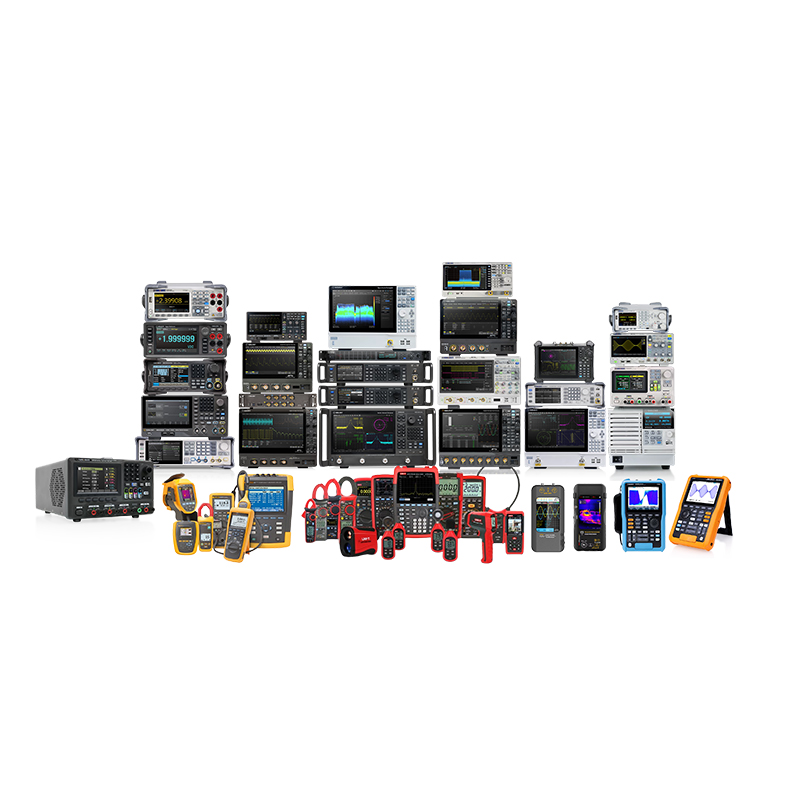
Electronic test and measurement instruments are the strategic cornerstone of the information electronics industry, widely regarded as the "scale" and "eyes" of modern industry. From the construction of 5G communication base stations, to R&D testing of new energy vehicles, to reliability verification of aerospace equipment, these instruments are indispensable throughout the entire product lifecycle — from design and development to manufacturing and quality inspection.
With the rapid advancement of cutting-edge technologies such as artificial intelligence, 6G communications, quantum computing, and semiconductors, along with the growing demand for self-reliance and supply chain security amid global industrial restructuring, the electronic test and measurement instrument industry is entering a new phase of growth. This article provides a comprehensive overview of market size, competitive dynamics, technology trends, and marketing strategies for industry professionals and procurement decision-makers.
2. Market Size: A $40 Billion Global Arena, with China Leading Growth
2.1 Global Market: Steady Expansion Toward $50 Billion
The global electronic test and measurement equipment market is approaching the $40 billion mark. According to industry data, the market was valued at approximately **$38.91 billion in 2024** and is projected to reach $54.49 billion by 2032**, representing a compound annual growth rate (CAGR) of approximately **4.3%** from 2024 to 2032. The 2025 global market size is estimated at around **$40.5 billion, with a growth rate of about 4.1%.
Key growth drivers include:
Telecommunications technology upgrades (5G/6G) driving explosive demand for testing,
Increasing reliance on precision measurement in strategic emerging industries such as new energy vehicles, semiconductors, and aerospace.
2.2 China Market: Faster Growth, Huge Localization Potential
The Chinese electronic measurement instrument market is growing at a faster rate than the global average. In 2021, the market size was approximately $5.04 billion**, and it is expected to reach **$6.48 billion in 2025 (~ RMB 46.6 billion), with a CAGR of about 6.5% from 2021 to 2025.
What is particularly noteworthy is the extremely low market share of domestic Chinese manufacturers. In the general-purpose electronic measurement instrument segment, the combined domestic revenue of China's three listed local players is only about RMB 0.8 billion, accounting for a mere ~5% of the domestic market. An estimated more than 80% of the market share is still held by U.S. and European brands. This underscores a massive opportunity for domestic substitution.
3. Competitive Landscape: Global Giants Dominate, Local Players Accelerate
3.1 Overview of the Competitive Landscape
The global electronic test and measurement instrument market has long been dominated by overseas giants such as Keysight Technologies, Rohde & Schwarz, and Tektronix. These companies boast long histories, deep technological expertise, and have built substantial barriers, particularly in the high-end product segment.
3.2 Breakthroughs by Domestic Manufacturers
In recent years, domestic players including Rigol Technologies, SIGLENT, and UNI-T have been consistently iterating on high-end products, achieving notable success:
Oscilloscopes: Rigol's DS80000 series oscilloscope sold 63 units in 2024, marking the first significant volume shipment of a high-end oscilloscope that meets international standards. Additionally, non-listed companies such as Wanliyan and Jiujin are also making rapid progress, with domestic oscilloscope capabilities advancing by leaps and bounds.
RF Instruments: SIGLENT has launched its "Galaxy Series Three-Piece Set," with product specifications continuing to improve significantly.
The sustained increase in the direct sales ratio of domestic instruments reflects the ongoing trend toward product premiumization. Moreover, advancements by domestic ADC (analog-to-digital converter) manufacturers are making chip independence for oscilloscopes increasingly feasible.
3.3 New Catalysts for Domestic Substitution: Tariffs and Policy Support
The tariff war in April 2025 reignited market confidence in achieving self-reliance in instrumentation. The imposition of reciprocal tariffs, combined with breakthroughs in high-end domestic products, has made domestic substitution both economically viable and technically feasible. Furthermore, the revised "Science and Technology Progress Law of the People's Republic of China" explicitly mandates that government procurement shall prioritize domestic instruments when their performance is comparable to that of foreign counterparts — providing an institutional safeguard for local companies.
4. Product Categories and Key Technical Selection Criteria
4.1 Main Product Categories
Electronic measurement instruments are broadly classified into general-purpose instruments and specialized instruments based on application areas. In terms of market share, RF instruments account for approximately 14.11% , dominating the market, followed closely by oscilloscopes at approximately 9.51% .
| Instrument Category | Primary Function | Typical Applications |
|---|---|---|
| Spectrum/Signal Analyzers | Measures signal frequency, power, distortion, etc. | Communication system testing, radar system design, EMC testing |
| Digital Oscilloscopes | Observes voltage waveforms over time | Electronic circuit debugging, timing analysis, signal integrity testing |
| Vector Network Analyzers | Measures S-parameters of RF/microwave devices | Antenna testing, filter tuning, RF device R&D |
| Signal Generators | Generates standard test signals | Component testing, system excitation, calibration |
| Digital Multimeters (DMM) | Measures voltage, current, and resistance | Basic electrical parameter measurement, system monitoring |
4.2 Core Considerations for Instrument Selection
When selecting instruments, engineers typically consider the following factors:
Frequency and Bandwidth: Ensure the instrument's analog bandwidth covers the frequency range of the signal under test. As a rule of thumb, oscilloscope bandwidth should be 3–5 times the highest signal frequency.
Range and Sensitivity: Verify that the input range is sufficient to capture the required signals and detect subtle variations.
Accuracy and Resolution: Test equipment accuracy should be significantly higher than the component's tolerance. A test accuracy ratio (TAR) of at least 4:1 is recommended.
Connectors and Interfaces: High-power RF applications require attention to connector types such as N-type, SMA, etc.
5. Emerging Trends: From Traditional Search to AI-Driven Customer Acquisition
In today's digital age, companies in the electronic test and measurement industry must also adapt their marketing strategies.
5.1 Diversification of Search Entry Points
Customer search behavior has expanded beyond traditional search engines to include AI-powered large model searches (such as Doubao, DeepSeek) and short-video platform searches (Douyin, Kuaishou). Companies that focus solely on traditional SEO will fail to cover the full customer journey.
5.2 "Information Assets" Become a New Competitive Advantage
In the age of AI-generated answers, brand visibility depends not only on website rankings but also on whether AI systems can retrieve and cite corporate information. One case study highlights a precision instrument manufacturer in Guizhou with strong technical capabilities that remained "invisible" in AI search results due to outdated website information, lack of structured data, and missing technical white papers.
Effective strategies include:
Knowledge Base Development: Structuring product test data, application case studies, technical white papers, and other content to facilitate AI retrieval and citation.
Multi-Dimensional Keyword Coverage: Building keyword systems from multiple perspectives — product names, functional features, application scenarios, technical standards — to improve search visibility.
Website as a "Content Hub": A corporate website should serve not just as a "business card" but as a "knowledge arsenal" that supplies AI with rich, structured content — integrating test reports, case libraries, and structured data markup.
6. Summary and Outlook
The electronic test and measurement instrument industry is currently benefiting from a convergence of positive factors: recovering demand, accelerating domestic substitution, and ongoing technological upgrades. As the global market moves toward $50 billion and domestic manufacturers continue to break through in high-end products, Chinese brands are well-positioned to claim a more significant role in the global competitive landscape.
 Shenzhen TTLTES Technology Co.
 Blog Post With Youtube Video
 Blog Post With Custom Quote